
Coins at War: How World War II Transformed the U.S. Cent, Nickel, and Dime
When the War Came Home to the Mint
The Second World War reshaped virtually every corner of American industry, and the United States Mint was no exception. Between 1942 and 1945, the familiar compositions of the Lincoln cent, Jefferson nickel, and — to a lesser degree — the Roosevelt dime were quietly but significantly altered. These were not cosmetic changes. They were decisions driven by the urgent demands of a nation at total war, and the coins that resulted stand today as some of the most historically fascinating and collectible issues in all of American numismatics.
The 1943 Steel Cent: Copper Goes to War
Copper was classified as a critical war material almost immediately after Pearl Harbor. The metal was essential to the production of ammunition shell casings — a single artillery shell required several pounds of copper alloy — and the Mint’s annual consumption of millions of cents represented a meaningful drain on strategic reserves. By late 1942, the Treasury Department had authorized a drastic compositional change: beginning in 1943, Lincoln cents would be struck on zinc-coated steel planchets rather than the traditional 95% copper alloy.
The resulting coins — struck at Philadelphia, Denver, and San Francisco — have a distinctive silvery appearance that caused considerable confusion among the public at the time. Vending machines rejected them. They were frequently mistaken for dimes. They rusted with alarming ease if the thin zinc coating was compromised. Despite these practical shortcomings, the 1943 steel cent accomplished its purpose. The Mint conserved approximately 35,000 tons of copper that year, material redirected into the war effort.
For collectors, the steel cent series is a tangible artifact of the home front. Well-preserved examples — particularly those grading MS-65 or higher with full luster and no surface rust — command strong premiums, though circulated examples remain affordable entry points for beginning collectors.
The 1943 Bronze Cent: America’s Most Famous Mint Error
No wartime coin story has captured the imagination of collectors more completely than the 1943 bronze cent. As the Mint converted to steel planchets in early 1943, a small number of copper planchets from the previous year remained in the hoppers of certain coining presses. These leftover blanks were inadvertently fed through the machinery and struck as regular production coins — indistinguishable in appearance from a standard 1942 Lincoln cent except for the date they now bore.
Fewer than 30 authentic examples are believed to exist across all three mints, with Philadelphia specimens being the most frequently encountered. Genuine 1943 bronze cents have sold at major auction houses for well in excess of $200,000, with top-graded examples approaching and occasionally surpassing the $1 million threshold. The 1943-D bronze cent is considered the rarest of the three mint varieties, with only a single confirmed specimen known.
The notoriety of this error has made it a perennial target for counterfeiters. The most common frauds involve copper-plating genuine 1943 steel cents, or altering the date on a 1948 bronze cent. Authentication is straightforward: a genuine 1943 bronze cent will not be attracted to a magnet, as steel is ferromagnetic and copper is not. However, the magnet test alone is insufficient for establishing authenticity — professional third-party grading and certification from PCGS or NGC is essential before any significant purchase.
The Wartime Jefferson Nickel: Silver Steps In
Nickel, like copper, was deemed indispensable to the war effort. The metal was a critical component in the production of armor plating and stainless steel for military equipment. Beginning with a portion of 1942 production and continuing through 1945, the Mint altered the Jefferson nickel’s composition from its standard 75% copper / 25% nickel alloy to a new wartime formula: 56% copper, 35% silver, and 9% manganese.
The silver content, while modest on a per-coin basis, added up to a meaningful quantity of recoverable metal over the course of wartime production. To facilitate the identification and future melting of these silver-bearing coins, the Mint made a deliberate and highly visible design modification: the mintmark was enlarged and relocated to a prominent position on the reverse, directly above the dome of Monticello. This was the first time a Philadelphia Mint issue bore a mintmark — the letter “P” appearing on U.S. coinage for the first time in the nation’s history.
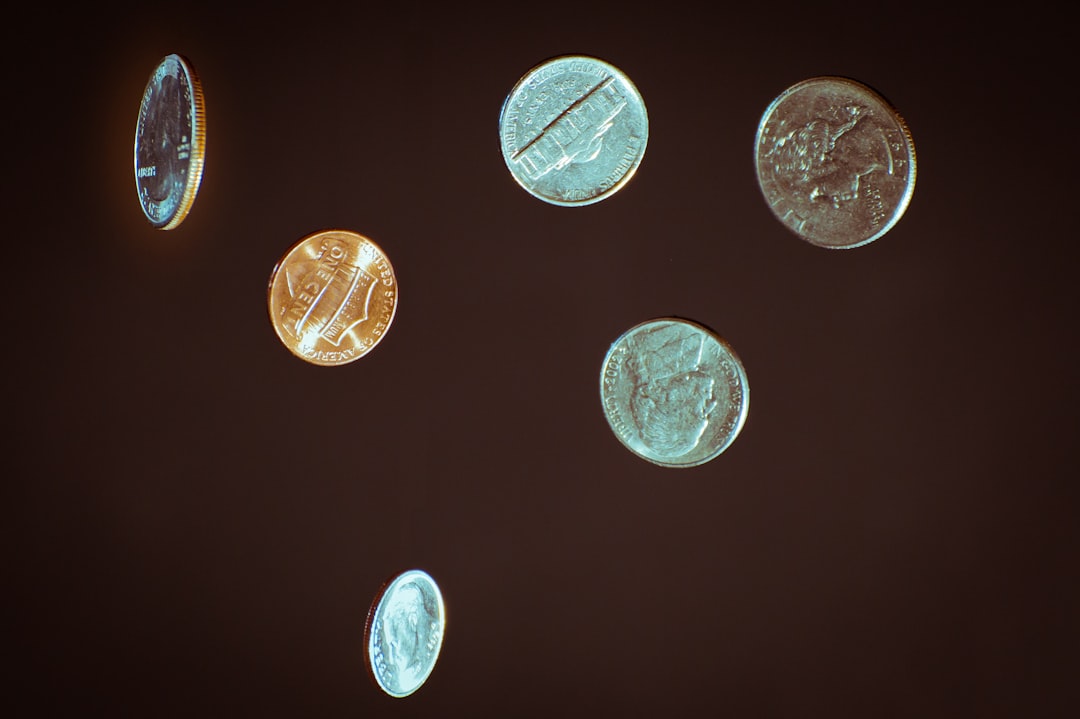
Wartime nickels are easily identified by this oversized mintmark — P, D, or S — above Monticello. Their slightly different surface texture and toning characteristics also distinguish them from pre- and post-war issues. For investors, wartime nickels offer a low-cost entry into 90% silver-era coinage, though their actual silver content per coin is modest. For historians and thematic collectors, they represent one of the most deliberate and well-documented design decisions in American coinage history.
The 1944 Steel Cent: The Mirror-Image Error
Just as the transition from copper to steel in 1943 produced a handful of bronze survivors, the return to copper planchets in 1944 produced its own error coinage. A small number of zinc-coated steel planchets, apparently left over from 1943 production runs, were struck with 1944 dies at the Philadelphia and San Francisco Mints. The result is the 1944 steel cent — the chronological mirror image of the 1943 bronze error.
Authentic 1944 steel cents are extraordinarily rare, with perhaps two dozen known examples across both mints. Unlike the 1943 bronze cent, a genuine 1944 steel cent will be attracted to a magnet — and that characteristic, counterintuitively, is part of how specialists begin the authentication process. As with its 1943 counterpart, professional certification is non-negotiable. Altered 1944 bronze cents with tooled dates have appeared on the market, and the consequences of purchasing an unverified example can be severe.
Both steel cent errors — 1943 bronze and 1944 steel — serve as remarkable reminders that even the most tightly controlled manufacturing environments are not immune to human oversight. In the context of a nation producing war materials at unprecedented scale, a few errant planchets finding their way into coin presses is almost understandable. That these coins survived, were recognized, and entered collections is a minor miracle of numismatic history.
Collecting Wartime Issues Today
The wartime cents and nickels occupy a unique position in American numismatics. They are simultaneously common enough to be accessible — raw 1943 steel cents and wartime nickels can be found in dealer inventories for a few dollars — and rare enough at the error level to command five- and six-figure sums. Building a complete wartime type set is a rewarding and historically resonant project for collectors at virtually any budget level.
Premier Rare Coins maintains an active inventory of certified wartime Lincoln cents, Jefferson nickels, and key-date error coins from the World War II era. Browse the current selection to find authenticated examples graded by PCGS and NGC, and add a piece of American wartime history to your collection.