
How to Start Collecting Mercury Dimes: A Beginner’s Guide to One of America’s Most Beautiful Coins
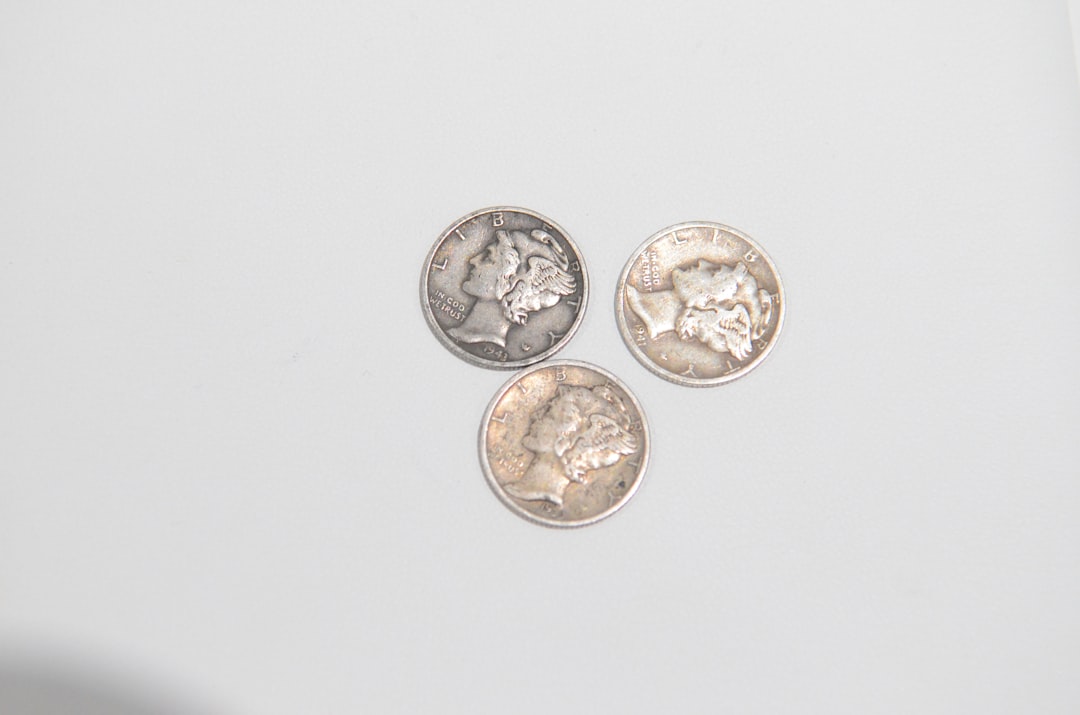
The Art and History Behind the Mercury Dime
Few American coins have captured the imagination of collectors quite like the Mercury Dime, struck from 1916 through 1945. Designed by sculptor Adolph A. Weinman, this ten-cent piece represents one of the finest achievements in American numismatic art — a product of the broader coin beautification movement that also gave rise to Augustus Saint-Gaudens’ legendary double eagle. Weinman, a German-born artist who trained under Saint-Gaudens himself, brought classical sensibility and extraordinary detail to a denomination that had previously received little artistic attention. His legacy extends well beyond this series — numismatists will recognize his work on the 2021-W Palladium Eagle, a modern tribute coin that carries his name in its official title.
The coin’s popular nickname is, strictly speaking, a misnomer. The obverse does not depict Mercury, the Roman messenger god. It portrays Liberty wearing a winged Phrygian cap — the wings symbolizing freedom of thought. The resemblance to classical depictions of Mercury was close enough that the nickname stuck almost immediately after the coins entered circulation in 1916, and it has remained ever since. The reverse features a fasces — a bundle of rods bound around an axe — flanked by an olive branch, representing military preparedness balanced with a desire for peace. That reverse design would also become the key to one of the most important grading distinctions in all of twentieth-century American numismatics.
Understanding Full Split Bands
When evaluating Mercury Dimes in higher grades, no single characteristic matters more to value than the presence of Full Split Bands, commonly abbreviated as FSB. On the reverse fasces, two horizontal bands bind the bundle of rods together. On a well-struck coin in strong condition, each of those bands will show a clear, complete separation down the center — a crisp division running fully across the band without interruption. Coins that exhibit this feature receive the FSB designation from grading services such as PCGS and NGC, and the premium that designation commands can be extraordinary.
A common date Mercury Dime in MS-65 condition might catalog for $50 to $100. The same date in MS-65 FSB can easily bring five to ten times that amount, and for scarcer dates, the multiplier grows even larger. Consider the 1924-D Mercury Dime with Full Bands as an illustration of just how dramatically the FSB designation elevates a coin’s collectibility and market value. The reason is straightforward: achieving full band separation requires both a sharply cut die and a well-centered, high-pressure strike. Many Mint State Mercury Dimes — even attractive ones — show weakness in the bands due to die wear, improper striking pressure, or a misaligned planchet. Collectors building a quality set should examine every coin carefully under magnification, or rely on certified examples from a reputable grading service when purchasing online.
Key Dates Every Collector Must Know
The Mercury Dime series contains several dates that represent genuine challenges for the set builder. The 1916-D Mercury Dime is universally recognized as the key date of the series, with a mintage of just 264,000 pieces. Even in heavily worn grades, authentic examples command significant premiums, and Mint State coins are genuinely rare. The 1921 and 1921-D are semi-keys, struck during a period of reduced Mint production following World War I. Both dates are considerably scarcer than their neighbors in the series and require a meaningful budget to acquire in problem-free circulated grades.
Among the most fascinating coins in the series are the 1942/41 overdate varieties, produced at both the Philadelphia and Denver Mints. These overdates occurred when dies prepared with a 1941 date were re-punched with a 1942 date — a die preparation shortcut that left traces of the underlying numerals visible on the finished coins. Under magnification, the remnants of the “1” from 1941 are clearly visible within the “2” of 1942. The 1942/1-D Mercury Dime overdate in particular carries a substantial premium and represents exactly the type of variety that makes this series intellectually engaging for advanced collectors.
Protecting Yourself from Counterfeits
The 1916-D’s status as the series key date makes it an attractive target for counterfeiters, and altered coins — typically Philadelphia Mint examples with a fabricated “D” mintmark added — appear in the marketplace with unfortunate regularity. Any prospective buyer should insist on certified examples from PCGS or NGC when purchasing this date, and should be immediately suspicious of unslabbed examples offered at prices that seem favorable. A certified 1916-D Mercury Dime from a trusted grading service provides the authentication assurance that no raw coin can match. Professional grading services use die variety analysis, weight measurements, and physical examination to detect alterations that are invisible to the naked eye.
Collectors should also be aware of two dates that simply do not exist: the 1923-D and the 1930-D. No Mercury Dimes bearing these date-and-mintmark combinations were ever struck by the United States Mint. When coins bearing these impossible combinations have surfaced, they have invariably been products of alteration or outright fabrication. Any dealer or auction offering a “1923-D” or “1930-D” Mercury Dime is either misinformed or dealing in fraud. A quick review of standard mintage records — readily available in any major price guide — is sufficient to identify these non-existent dates before any money changes hands.
Building a Complete Set on a Budget
Despite the intimidating reputation of a few key dates, the Mercury Dime series is genuinely accessible for collectors working with modest budgets. The vast majority of dates in the series — including issues from Philadelphia, Denver, and San Francisco — are readily available in Good to Fine grades for between $3 and $15 per coin. A complete date-and-mintmark set contains 77 coins, and perhaps 65 of those can be assembled for well under $20 each. The arithmetic is encouraging: a nearly complete set in circulated grades is within reach for a total investment of $500 to $700, excluding the key and semi-key dates.
The strategy most experienced collectors recommend is to build the set from the bottom up. Acquire the affordable common dates first in the best grade the budget allows, then allocate savings toward the more challenging pieces: the 1916-D, the 1921 and 1921-D, and the overdates. A strong starting point for any new collector is a certified first-year example such as the 1916 Mercury Dime in MS with Full Bands — it anchors the set beautifully and establishes a quality benchmark for coins acquired afterward. Purchasing certified coins with accurate grades eliminates the risk of overpaying for cleaned or damaged examples that will prove difficult to resell. Patience and discipline, combined with a clear understanding of which dates are genuinely scarce, will serve any new Mercury Dime collector far better than rushing to fill every hole at once.
Premier Rare Coins maintains an active inventory of Mercury Dimes across all grades and key dates, including certified examples of the 1916-D, 1921, 1921-D, and the 1942/41 overdate varieties. Browse the current Mercury Dime selection to find the next addition to your collection, or contact our numismatic specialists for personalized guidance on building a complete set.
Shop Related Coins
- 1916-D Mercury Dime — $3,815.00
- 1916 Mercury Dime MS Full Bands — $1,050.00
- 1942/1-D Mercury Dime Overdate — $721.50