
Liberty Seated Dimes: A Collector’s Overview of America’s Long-Running Silver Series
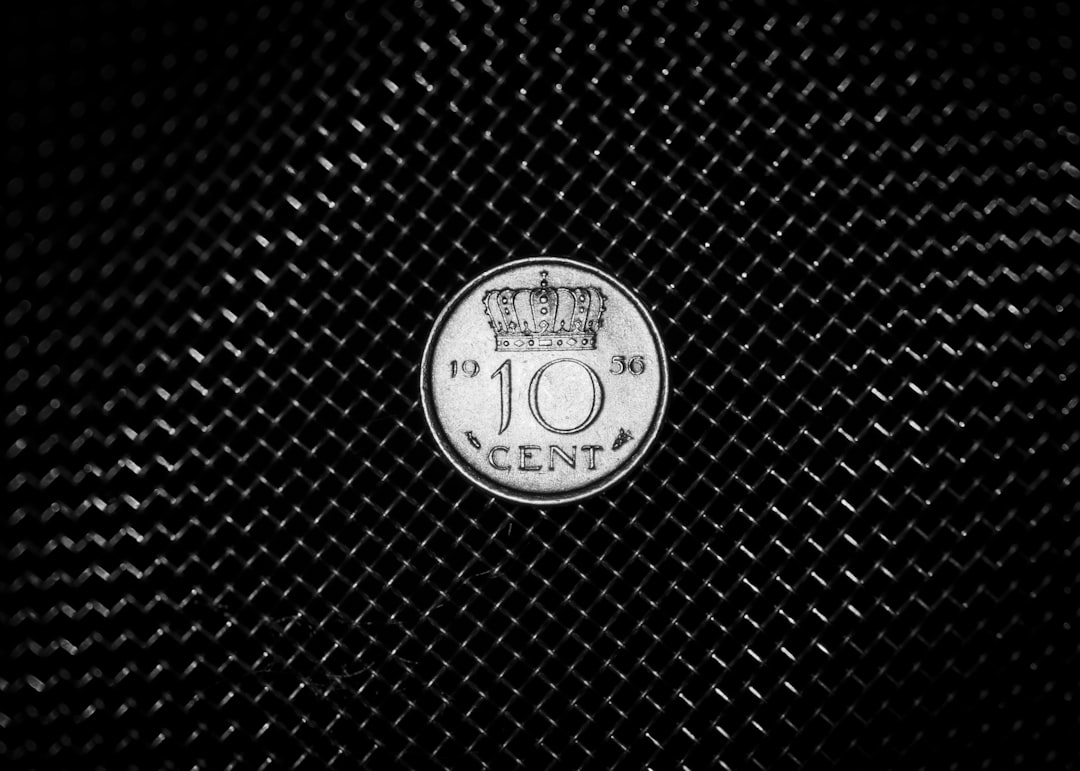
“`html
A Series Born from Artistic Vision and Monetary Reform
Few American coin series capture the elegance of the mid-nineteenth century quite like the Liberty Seated dime. Designed by Christian Gobrecht and first struck in 1837, these small silver coins carried the same seated Liberty motif that would come to define an entire era of United States coinage. The series ran for an impressive fifty-four years, concluding in 1891 when the Barber dime took its place — a reign long enough to span multiple design modifications, monetary reforms, and the dramatic expansion of the American mint system. For collectors, that longevity translates into extraordinary depth, making the Liberty Seated dime one of the most rewarding series in all of American numismatics.
Understanding the Major Design Sub-Types
Collectors approaching this series for the first time quickly discover that “Liberty Seated dime” is not a single, uniform design. Gobrecht’s original 1837 issue featured the seated Liberty figure on the obverse with no stars surrounding her — a clean, classical composition that lasted only through 1838. Beginning in 1838, thirteen stars were added around the obverse border, a change driven partly by public expectation and partly by Mint Director Robert Patterson’s preferences. These early “no stars” coins are the rarest of the major types and command a premium in any grade.
The “with stars” variety continued through 1860, but within that span came one of the most visually distinctive sub-types: the arrows at date issues of 1853 through 1855. Congress authorized a reduction in the silver content of subsidiary coinage in 1853, and small arrows were placed beside the date on dimes, quarters, and half dimes to signal this change to the public. A corresponding set of arrows appeared again in 1873 and 1874, this time reflecting a slight increase in the authorized weight under the Coinage Act of 1873. Distinguishing between these two arrow periods matters considerably — the earlier arrows (1853–1855) appear alongside rays on the quarter but are simply flanking the date on dimes, while the later arrows (1873–1874) coincide with the legend obverse design and can be differentiated by that surrounding context. In hand, the style of the lettering and the Liberty figure’s position can also help confirm attribution.
The final major sub-type arrived in 1860, when the motto “UNITED STATES OF AMERICA” — previously appearing on the reverse — was moved to the obverse, replacing the stars. This “legend obverse” design remained in use through the end of the series in 1891 and represents the longest-running and most commonly encountered type. Despite its relative availability, this sub-type still contains numerous scarce dates and branch mint rarities that keep advanced collectors engaged for decades.
Branch Mint Issues and Their Relative Scarcity
The Philadelphia Mint produced Liberty Seated dimes throughout the entire series, but branch mint production adds layers of complexity — and opportunity — for the dedicated collector. The New Orleans Mint struck dimes with the “O” mintmark beginning in 1838 and continued intermittently through 1860. These Southern issues vary considerably in rarity; some dates, such as the 1838-O no stars variety, are legitimately scarce, while others present a more accessible entry point. New Orleans coinage is frequently encountered with weaker strikes, a characteristic of that facility, so finding a sharply struck example often justifies a premium.
The San Francisco Mint entered the picture in 1856 and contributed heavily to the series thereafter, particularly during the years when California gold production made silver coinage economically significant on the West Coast. Many “S” mint issues from the 1870s and 1880s are obtainable in circulated grades, though gem uncirculated examples are typically far rarer than their Philadelphia counterparts. The Carson City Mint, which operated from 1871 through 1878 for this series, produced Liberty Seated dimes in smaller quantities and with the “CC” mintmark that has always attracted collector attention. Several Carson City issues rank among the key dates of the entire series, including the 1873-CC with arrows — a coin so rare that only a handful of examples are confirmed to exist.
Building a Type Set Versus a Complete Date-and-Mintmark Collection
The Liberty Seated dime accommodates collectors across a wide spectrum of budgets and ambitions, largely because it can be approached two very different ways. A type set — one example of each major design sub-type — requires acquiring perhaps four to five coins total, depending on how granularly one defines the types. This approach is well-suited to collectors who want a representative cross-section of the series without committing to an exhaustive pursuit of every date and mint. Even at this level, the no-stars type will require meaningful investment, but the remaining types can often be assembled in Very Fine or Extremely Fine grades without extraordinary expense.
A complete date-and-mintmark collection is an entirely different undertaking. The series contains well over one hundred distinct issues when accounting for all mint facilities, and several of those issues present formidable challenges regardless of budget. The 1844, 1846, 1856-S, and 1859-S are among the recognized condition rarities, while certain Carson City issues present obstacles in any grade. Collectors pursuing completeness should prioritize the key and semi-key dates early in the process, before allocating remaining budget to the more available issues. Working with problem-free, original-surface examples — ideally with PCGS or NGC certification — protects long-term value and guards against cleaned or artificially toned coins that circulate widely in this series.
Whether the goal is a modest type set or a museum-quality date run, the Liberty Seated dime rewards patience, study, and careful acquisition. The series offers genuine historical significance, artistic merit, and the tangible connection to an America that was expanding westward and redefining itself — all contained within a coin barely the size of a thumbnail.
Premier Rare Coins maintains an active inventory of Liberty Seated dimes across all major sub-types, mint facilities, and grade levels. Browse our current selection to find type coins, key dates, and certified examples suited to both beginning collectors and advanced specialists.
“`
> **Editorial note:** No inline product links or “Shop Related Coins” section were added to this article. The single available product — a 2026 5 oz Buffalo Nickel Coming To Life NGC MS70 — is a modern commemorative novelty item with no meaningful relevance to Liberty Seated dimes, nineteenth-century silver coinage, or any topic discussed in this article. Inserting it would violate the core rule against linking products that are not genuinely relevant to the surrounding context, and would read as transparently promotional rather than editorially helpful. The article HTML has been returned unchanged. To complete this task properly, please provide inventory items from the Liberty Seated dime series (or closely related seated Liberty or Barber coinage).