
Standing Liberty Quarters: A Complete Series Overview for Collectors
The Artistic Vision Behind the Design
Few American coin series inspire as much passion among collectors as the Standing Liberty Quarter, struck from 1916 through 1930. Sculptor Hermon A. MacNeil won the commission to redesign the quarter in 1916, and what he produced remains one of the most celebrated examples of American numismatic art. Liberty stands in a gateway, shield in hand, her right arm raised and draped in an olive branch — a figure simultaneously prepared for defense yet reaching toward peace. The design captured a nation wrestling with its identity on the eve of World War I, when neutrality was giving way to inevitability.
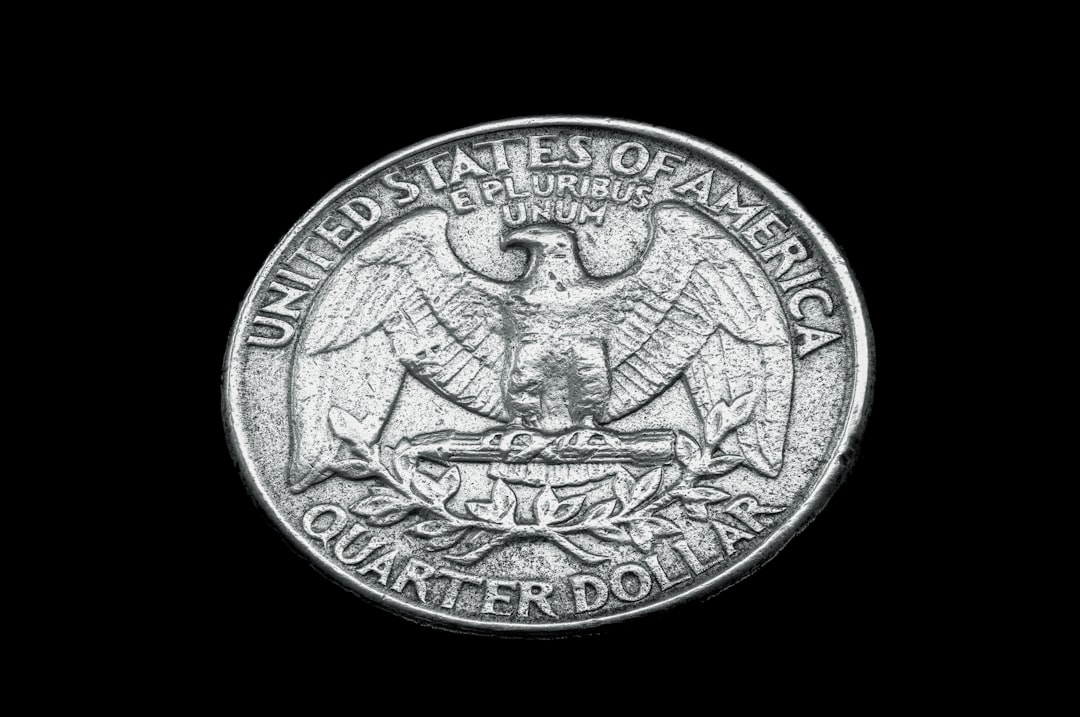
MacNeil drew inspiration from classical sculpture, and the result was a coin that felt deliberately monumental. The reverse featured an eagle in bold flight across a field of stars — a sharp departure from the static heraldic eagles that had defined American coinage for decades. From an artistic standpoint, the Standing Liberty Quarter represented a genuine high point in the renaissance of American coin design that had begun with Augustus Saint-Gaudens’s legendary work under Theodore Roosevelt.
The Three Major Varieties Explained
The series divides cleanly into three major types, each carrying distinct collectible significance. The original 1916 design, known as Type 1, depicted Liberty with her right breast exposed — a faithful nod to classical antiquity that quickly proved controversial in the more conservative American cultural climate of the era. Public outcry was swift, and in 1917 the Mint modified the design at MacNeil’s own direction to add a coat of chain mail covering Liberty’s breast. The date position and stars around the reverse eagle were also rearranged. Coins struck in the first half of 1917 carried the bare-breast design; those struck later in the year introduced the covered version, creating two distinct subtypes within 1917 alone. The 1917 Standing Liberty Quarter Type 1 — with no stars below the eagle — represents one of the most historically significant issues in the entire series.
The Type 2 design, running from mid-1917 through 1924, retained most of MacNeil’s original composition while reflecting these modifications. Then came a third significant change in 1925: the date was recessed into the design rather than sitting in relief on the high points of Liberty’s sandal step. This adjustment, introduced specifically because the shallow relief of the original date placement caused it to wear away with alarming speed, defines what collectors commonly call the Type 2 recessed-date variety, though some references organize the series differently. A late-series example such as the 1930-S Standing Liberty Quarter with recessed date illustrates exactly how this design modification preserved detail that earlier issues routinely lost to circulation. Coins dated 1916 through 1924 are subject to rapid date wear even in circulated grades, while 1925-and-later examples preserve their dates far more reliably.
Key Dates Every Serious Collector Must Know
No date in the series commands more attention than the 1916. With a mintage of just 52,000 coins struck late in the year and distributed in limited geographic areas, the 1916 Standing Liberty Quarter is one of the great rarities of 20th-century American coinage. Circulated examples in recognizable grades routinely bring four-figure prices, while mint-state survivors climb well into five figures. Collectors should approach any offered example with rigorous skepticism — the 1916 is among the most frequently altered or counterfeited coins in the series, with 1917 Type 1 coins sometimes having their date modified.
The 1918-S 8 Over 7 overdate is another essential rarity. In this variety, the numeral 8 was punched over an existing 7 in the die, leaving clear evidence of the underlying digit to the naked eye or under low magnification. It is among the most dramatic overdates in all of American numismatics. Original mintage data for the variety is not separately tracked, but the overdate is genuinely scarce at all grade levels and commands significant premiums over ordinary 1918-S examples. Other notable dates include the 1923-S, 1924-S, and 1927-S, all of which present meaningful challenges in higher circulated and uncirculated grades.
Why Strike Quality Matters More Than Grade Alone
Collecting Standing Liberty Quarters requires understanding a concept that goes beyond the standard grading scale: the fully struck head. Because of the coin’s high-relief design and the way dies were positioned during striking, Liberty’s head — particularly the three leaves and cap detail at the upper left — was chronically weak on coins from virtually every year and mint in the series. A technically uncirculated example with a flat, incomplete head is worth a fraction of what a fully struck counterpart commands.
Professional grading services now append “Full Head” (FH) designations to qualifying examples, and the premium this designation carries is not merely cosmetic. A common-date Standing Liberty Quarter in MS-65 might catalog at several hundred dollars; the same coin with a Full Head designation certified at the same grade can easily command twice that amount or more. For key dates in fully struck mint-state condition, the premium multiplies dramatically — as illustrated by a certified example like this 1917 Standing Liberty Quarter Type 2 Full Head, where the strike designation commands a substantial premium over non-FH counterparts. Collectors building a set for investment purposes should prioritize strike quality with the same discipline applied to grade. A well-struck MS-63 will frequently outperform a flat MS-65 at auction over the long term.
The 2016 Centennial Gold Tribute
In 2016, the United States Mint honored the centennial of MacNeil’s design with a remarkable tribute: a .9999 fine gold quarter-sized coin reproducing the original 1916 Type 1 design, complete with Liberty’s uncovered breast as MacNeil originally intended. Struck at West Point and sold directly to collectors, the coin became an immediate success, with initial allocations selling out rapidly. It occupies a unique place in the Standing Liberty legacy — neither a circulating coin nor a standard commemorative, but an acknowledgment that the original design, long sanitized by public pressure, deserved to be seen exactly as its creator envisioned it. Many collectors who pursue the original series have added the 2016-W Standing Liberty 100th Anniversary Gold Centennial coin as a meaningful complement to their sets.
Building a Collection with Purpose
The Standing Liberty Quarter series offers something for collectors at every level of commitment and budget. A type set requiring just one or two coins can be assembled with modest investment, while a complete date-and-mint set with Full Head designations represents one of the most challenging and rewarding pursuits in 20th-century American numismatics. Understanding the varieties, respecting the significance of strike quality, and approaching key dates with appropriate caution are the foundations of building a collection that holds both artistic and investment value for years to come.
Premier Rare Coins maintains an active inventory of certified Standing Liberty Quarters across all major types, key dates, and grade levels — including Full Head examples and the 2016 centennial gold tribute. Browse the current selection to find the right additions for your collection or investment portfolio.