
Morgan Silver Dollars: The Definitive Series Guide for Collectors
“`html
The Origins of an American Icon
Few series in American numismatics command the reverence, the collector base, or the sheer historical weight of the Morgan silver dollar. Struck from 1878 through 1904, and again in a final year of production in 1921, the Morgan dollar stands as one of the most extensively collected and studied coin series ever produced by the United States Mint. Its story begins not simply with a talented engraver, but with the political and economic forces of a post-Civil War nation still finding its footing.
The Bland-Allison Act of 1878 set the series in motion. Passed over President Hayes’s veto, the legislation required the Treasury Department to purchase between two and four million dollars’ worth of silver each month and convert it into standard silver dollars. Western mining interests and agrarian advocates had lobbied aggressively for the measure, viewing silver coinage as a counterweight to tight monetary policy. The result was a mandate that would produce hundreds of millions of large silver coins — far more than commerce ever demanded — and ultimately fill Treasury vaults to overflowing.
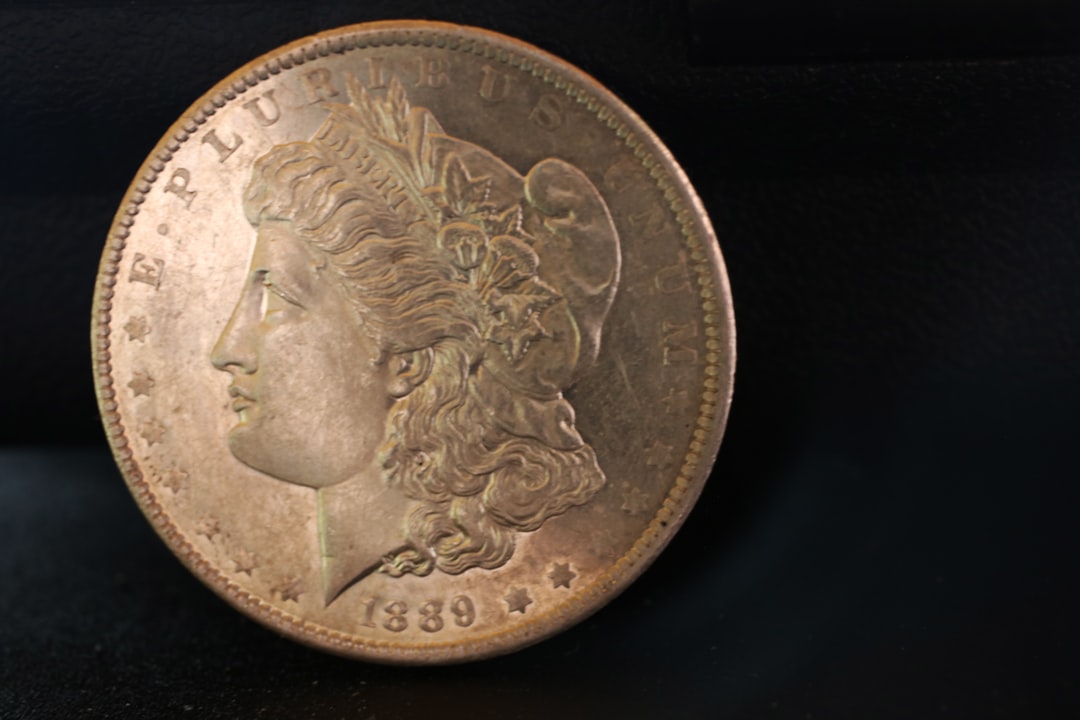
Into this environment stepped George T. Morgan, a young British-born engraver who had trained under William Wyon at the Royal Mint before emigrating to the United States in 1876. Assistant Engraver at the Philadelphia Mint, Morgan took a meticulous approach to his new dollar design. He used Anna Willess Williams, a Philadelphia schoolteacher, as his primary model for Liberty’s portrait. The result was a high-relief, classically composed obverse paired with a bold heraldic eagle reverse — a design that has aged remarkably well and remains instantly recognizable nearly a century and a half later. The very first year of issue, the 1878 8 Tailfeathers Morgan Dollar, reflects the series at its most experimental, with multiple reverse varieties struck before a final design was settled.
Five Mints, Five Distinct Characters
Morgan dollars were produced at five different facilities, each imparting its own personality to the coins it struck. The Philadelphia Mint, which produced coins without a mintmark, generally delivered well-struck examples with strong luster, though quality varied across decades and die states. San Francisco Mint issues are widely regarded as the finest in the series — the “S” mintmark coins frequently exhibit needle-sharp strikes, satiny surfaces, and exceptional cartwheel luster that make them favorites among registry set collectors. The 1880-S Morgan Dollar is a perennial favorite among type collectors for exactly these qualities.
The Carson City Mint, identified by the “CC” mintmark, holds a special mystique. Operating in the heart of Nevada’s Comstock Lode country, Carson City produced coins that were, in a sense, made from the very silver pulled out of the ground nearby. Carson City Morgans tend to show somewhat softer strikes than their San Francisco counterparts, but their frontier heritage and limited mintages make them intensely sought after. The 1884-CC Morgan Dollar is among the more accessible CC dates and represents an excellent entry point into the Carson City subset. The New Orleans Mint, using an “O” mintmark, is known for inconsistent strike quality — many New Orleans issues exhibit weakness at the eagle’s breast feathers and at Liberty’s hair above the ear, though high-grade examples still command strong premiums. The 1884-O Morgan Dollar is a classic example of a New Orleans issue that remains widely collected for its affordability and historical significance. Denver, the newest facility in the series, struck Morgan dollars only in 1921, its single year of participation marked with a “D” mintmark.
Key Dates, Rarities, and Major Varieties
No discussion of the Morgan dollar series is complete without addressing its most celebrated rarities. The 1893-S is the undisputed key date — with a mintage of just 100,000 pieces and a survival rate that makes high-grade examples extraordinarily scarce, this issue has anchored serious collections and auction records for generations. In circulated grades, a genuine 1893-S is a significant acquisition; in Mint State, it is among the most coveted coins in all of American numismatics.
The 1895 Philadelphia issue occupies its own singular place in the series. No business strike examples are known to exist — only 880 proof specimens were struck, and those represent the only surviving 1895 Morgans. Any circulated coin offered as a business strike 1895-P is almost certainly an altered-date counterfeit and must be authenticated by a major grading service before any transaction is considered.
Beyond these pinnacle rarities, the Carson City issues as a group reward focused collectors. The 1879-CC, 1889-CC, and 1893-CC all carry substantial premiums, and assembling a complete CC set in respectable grades represents a serious long-term project. Among varieties, the 1878 8 Tailfeathers, the 1880-S 80/79 overdate, and the VAM (Van Allen-Mallis) varieties catalogued throughout the series provide virtually endless avenues for specialist research. Overdate enthusiasts will also find the 1887/6 Morgan Dollar a compelling addition — one of the most visually dramatic overdates in the entire series.
Grading Considerations and Strike Quality
Grading Morgan dollars requires attention to strike, luster, and surface preservation in equal measure. The high points most susceptible to wear are Liberty’s cheek and hair above the ear on the obverse, and the eagle’s breast feathers and wing tips on the reverse. Strike quality varies dramatically — a softly struck New Orleans coin may appear to show wear even in an uncirculated grade, while a sharply struck San Francisco coin can look nearly pristine well into the circulated range.
Bag marks are a persistent consideration for Mint State examples. Because Morgan dollars were stored and shipped in canvas bags of 1,000 coins, contact marks are endemic to the series. A truly mark-free MS-65 Morgan is a genuinely rare thing across most dates and mints. Professional grading by PCGS or NGC is strongly recommended for any coin being purchased at a significant premium, as the Morgan dollar market is unfortunately well populated with cleaned, polished, and otherwise impaired examples that can deceive inexperienced eyes. The 1879-S Morgan Dollar (Reverse of 1878) illustrates exactly why certified examples matter — a PCGS-secured coin in this transitional variety eliminates any question of authenticity or grade.
Why Morgan Dollars Endure
The Morgan dollar’s enduring popularity stems from a convergence of factors that few other series can match. The coins are large and visually impressive — 38.1mm of 90% silver makes for a substantial, satisfying piece. The series spans 28 years across five mints, offering a collecting challenge that can be pursued at virtually any budget level. The historical context — the silver debates, the frontier mints, the Treasury hoard releases of the 1960s — gives each coin a narrative dimension beyond mere metallic value. And the robust secondary market, driven by millions of active collectors and investors, ensures strong liquidity that more obscure series cannot match.
Whether the goal is assembling a date-and-mintmark set, pursuing a single high-grade registry coin, or simply acquiring a few historically significant pieces, the Morgan dollar series offers something meaningful at every level of engagement. New collectors often begin with an approachable New Orleans issue like the 1888-O Morgan Dollar, while more advanced collectors gravitate toward scarcer San Francisco dates such as the 1883-S Morgan Dollar. It is, in the truest sense, a cornerstone of American coin collecting.
Premier Rare Coins maintains an active inventory of Morgan silver dollars across all dates, mints, and grades — from circulated type coins to certified key dates and major varieties. Browse the current Morgan dollar listings to find the next addition to your collection, or contact our team directly for assistance sourcing specific issues.
Shop Related Coins
- 1884-CC Morgan Dollar (PCGS Secure) — $999.00
- 1879-S Morgan Dollar, Reverse of 1878 (PCGS Secure) — $1,265.00
- 1887/6 Morgan Dollar — $2,830.50
“`